Pack for the timetable, climate and laundry reality
Generic packing lists grow because they try to cover every possible trip. Start instead with three facts: how often you will practise, the weather at the exact location and whether laundry is available. A seven-day retreat with two daily classes does not require fourteen outfits if clothing can be washed and dried.
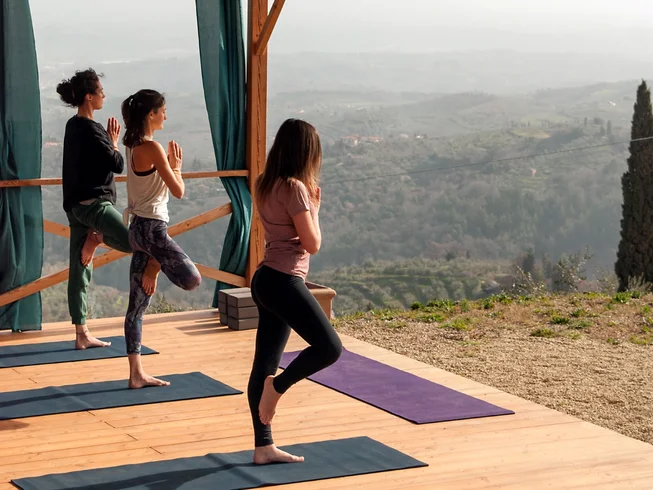
Mountain areas, deserts and tropical coasts can all be cooler than expected at dawn. Check typical temperatures rather than relying on a destination’s reputation. Open-air shalas make wind and humidity relevant. A light layer that stays in place during seated practice is often more useful than another pair of leggings.
Build a small practice wardrobe
Choose clothes you have already practised in. Retreat is a poor place to discover that a waistband rolls, a top becomes transparent or a seam irritates during long holds. Bring enough combinations to let damp pieces dry fully, particularly in humid climates.
A simple capsule might include three or four bottoms, four or five tops, supportive layers where wanted, and one warm cover-up. Add socks for Yoga Nidra or Restorative sessions. If the retreat includes temples, villages or shared dining spaces, bring clothing that covers shoulders and knees without turning cultural respect into an improvised scramble.
Ask before carrying equipment
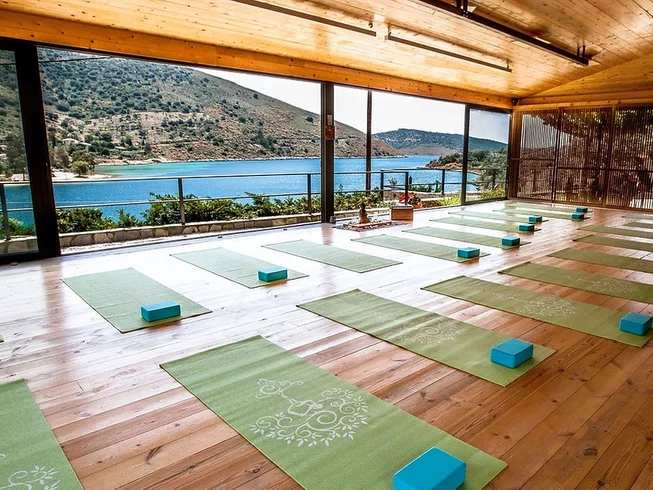
Most established retreat centres provide mats and basic props, but quality and quantity vary. Ask about mats, blocks, straps, bolsters, blankets and meditation cushions. If you are particular about hygiene or grip, a foldable travel mat or mat towel may be worth the luggage space.
Bring any small prop that materially changes your practice, such as an eye pillow, lightweight strap or knee support. Do not assume the airline will treat a rolled mat as a free personal item. A bulky prop that creates stress at every transfer is unlikely to improve the week.
Treat health items as non-negotiable
Prescription medication belongs in hand luggage in its original packaging, with enough for delays. Add basic first-aid items you know how to use, sun protection, insect repellent where relevant and any menstrual products you prefer. Remote locations may have limited shops and unfamiliar brands.
Bring a reusable water bottle only if the centre provides safe refills; ask rather than assuming tap water is suitable. Electrolytes can be useful in hot climates, but they are not a substitute for sensible pacing. Travel insurance documents and emergency contacts should be accessible offline.
Prepare for the activities beyond yoga
Read the itinerary line by line. Surfing needs secure swimwear and reef-appropriate sun protection. Mountain walks may require proper footwear and a waterproof layer. Spa programmes might call for easy sandals, while cultural visits may require modest dress.
One outfit that feels good at a shared dinner is usually enough. Retreats are rarely fashion competitions, and repeating clothes is normal. A lightweight tote or daypack is more useful than several occasion-specific bags.
Make technology a deliberate choice
Bring the correct plug adaptor, a short charging cable and a power bank if transfers are long. Download travel documents, maps and insurance details before leaving home. If you use your phone for photographs, decide where it will live during classes so it does not become a constant presence in the practice space.
A retreat does not require a dramatic digital detox. You can set a modest rule, such as checking messages once after lunch. Tell important people when you will be reachable. Intentional access is often more sustainable than switching everything off and worrying about what you are missing.
Leave space in the case and in the plan
Items commonly overpacked include books, specialist beauty products, extra shoes and aspirational clothes. Bring one notebook if you genuinely write by hand, one book you want to read and toiletries that make you comfortable. Leave valuable jewellery and anything difficult to replace at home.
The useful test is whether an item solves a likely problem. Packing lightly makes transfers easier, reduces decisions and leaves room for something local. The goal is not minimalist virtue; it is arriving with what supports the week and without a case full of imagined versions of yourself.
The final 24-hour check
The day before departure, put documents, medication, valuables and one practice outfit in hand luggage. Check the forecast, transfer contact and arrival instructions. Photograph your passport and insurance details, store copies securely, and make sure an emergency contact has the itinerary. Charge devices and download anything you will need offline.
Then remove one category from the main case. It might be a second pair of smart shoes, spare books or duplicate toiletries. The small amount of empty space makes repacking easier and reduces the feeling that every day requires a costume. Retreat life is repetitive by design; your luggage can be too.
YogaHotel offers travel and editorial guidance, not medical advice. Retreat practices vary, and individual health needs should be discussed with an appropriately qualified professional and the retreat organiser.